December 17, 2020 -- Ginkgo Bioworks, Azitra, Inc., Florida International University (FIU), and Latham BioPharm Group (LBG) have been awarded a contract by the Defense Advanced Research Projects Agency (DARPA) for up to $15M, as part of its ReVector program. This program aims to maintain the health of military personnel operating in regions highly affected by mosquito-borne diseases. The team plans to create a new type of mosquito repellent based on the skin microbiome.
Working together, the combined team plans to harness the human skin microbiome—the rich, diverse microbes found on the skin—to create a Live Biotherapeutic Product (LBP) that can block human chemical signals that attract mosquitoes while also repelling the insects. The resulting product is expected to have significant military, consumer, and global health applications.
Mosquito-borne diseases, such as malaria and Zika virus, account for over a million deaths worldwide. The program aims to protect military personnel operating in regions highly affected by mosquito-borne diseases. Currently available mosquito repellents fail to provide long-lasting, effective protection: they require application to the skin every few hours and are impractical for use in certain military environments.
The human skin microbiome is composed of beneficial microorganisms, including bacteria, that provide protection against dermatological disease as well as contributing to improved skin health and appearance. Research shows, however, that certain microbial species within the human skin microbiome produce volatile odor-based chemical signals that attract mosquitoes.
Ginkgo Bioworks, Azitra, FIU, and LBG plan to study how mosquitoes sense humans by skin-associated volatile compounds and aim to engineer and develop a bacterial-based LBP. The goal is to create a safe product that can be easily applied to the skin and provide protection against mosquito bites for up to two weeks without reapplication.
“The ability to program living cells that are part of our natural microbiome, and thus improve our ability to fight off challenges like mosquito vectoring of disease, has enormous potential in global health. Our research in collaboration with Azitra, FIU, and LBG could be transformative to the next generation of living medicine,” said Jason Kelly, Ph.D., co-founder and chief executive officer of Ginkgo Bioworks. “We’re doubling down on our collaboration to improve the future of human health through the power of biology.”
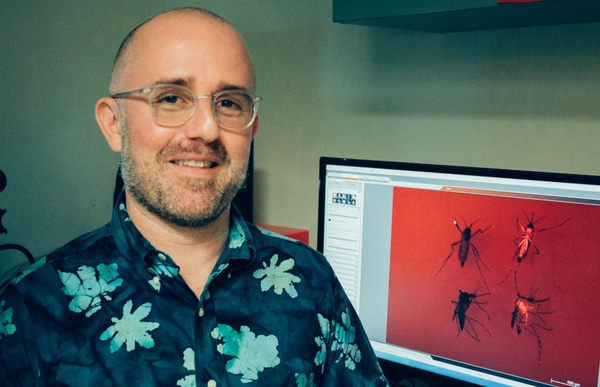
To support this project, Azitra will leverage its extensive scientific knowledge of the skin microbiome to develop and characterize various bacterial strains. Ginkgo Bioworks will contribute its foundries and deep expertise in bioengineering to provide strain engineering. In the initial research phase of the project, the companies will collaborate with top mosquito researcher and neurogeneticist Matthew DeGennaro, Ph.D., of FIU’s Biomolecular Sciences Institute, who brings expertise in molecular genetics and odor attraction profile of mosquitoes as well as mosquito repellents. Throughout the project, Latham will provide program management, systems integration support and technical product development support.
“DEET has been the gold standard for mosquito repellency since the 1940s,” said DeGennaro, who is also director of FIU’s Laboratory of Tropical Genetics. “Over the past 80 years, we have learned so much more about how mosquitoes find their hosts. Now is the time for us to leverage that knowledge to break the cycle of mosquito-borne illness. I am so excited to work with Ginkgo Bioworks, Azitra, and LBG to design and deploy this next-generation repellent.”
As the program progresses, Azitra will bring its significant expertise in formulating, packaging, and making microbiome products that can safely integrate with the natural skin microbiome.
“We are extremely excited to partner with Ginkgo Bioworks, FIU, and LBG on this visionary project of engineering the skin microbiome to produce a new class of living, long-lasting, and safe mosquito repellants. Together, Azitra and Ginkgo bring the world’s best genetic engineering capabilities applied to the skin microbiome to execute this vision,” said Travis Whitfill, MPH, Azitra’s co-founder and executive director of advanced technology. “We hope to address a major global healthcare burden while advancing the concept of using engineered microbes that are part of our natural microbiome to improve human health.”
About Ginkgo Bioworks
Headquartered in Boston, Ginkgo Bioworks uses the most advanced technology on the planet—biology—to grow better products. The company’s cell programming platform is enabling the growth of biotechnology across diverse markets, from food to fragrance to pharmaceuticals. For more information, visit www.ginkgobioworks.com.
About Azitra
Azitra, Inc. is a clinical-stage medical dermatology company that combines the power of the microbiome with cutting-edge genetic engineering to treat skin disease. The company was founded in 2014 by scientists from Yale University and works with world-leading scientists in dermatology, microbiology, and genetic engineering to advance its pharmaceutical programs to treat cancer therapy associated skin rashes, targeted orphan indications and atopic dermatitis.
Learn more at www.azitrainc.com
About FIU
Florida International University is Miami’s public research university, focused on student success. According to U.S. News and World Report, FIU has 26 top-50 rankings in the nation among public universities and Washington Monthly Magazine ranks FIU among the top 20 public universities contributing to the public good and No. 12 for social mobility. FIU is a top U.S. research university (R1), with more than $200 million in annual expenditures. FIU ranks 15th in the nation among public universities for patent production, which drives innovation, and is one of the institutions that helps make Florida the top state for higher education. The Next Horizon fundraising campaign is furthering FIU’s commitment to providing students Worlds Ahead opportunities. Today, FIU has two campuses and multiple centers, and supports artistic and cultural engagement through its three museums: Patricia & Phillip Frost Art Museum, the Wolfsonian-FIU, and the Jewish Museum of Florida-FIU. FIU is a member of Conference USA, with more than 400 student-athletes participating in 18 sports. The university has awarded more than 330,000 degrees to many leaders in South Florida and beyond. For more information about FIU, visit www.fiu.edu.
About LBG
Headquartered in Cambridge, MA, Latham BioPharm Group (LBG) is a consulting firm that provides a range of life science services with proven experience in biodefense/pandemic response, medical countermeasure development, and strategic product development. LBG consultants have extensive experience in the functional and fiscal management of government-funded programs for medical countermeasure technology development. This experience includes the program management/systems integration, process development, manufacturing, preclinical, clinical, quality and regulatory aspects of product development.